Follow the Smart Money: 13F Filings and Insider Buying, Explained
Twice a quarter, the world's best investors are legally required to show you their hands. Here's how to read them — and how not to.
The market's worst-kept secret
Imagine if every professional poker player had to publish their hands a few weeks after playing them. That's roughly what US securities law does to big investors — and almost no retail investor takes advantage of it.
Two disclosure regimes matter here:
- 13F filings. Every institution managing over $100 million must report its US stock holdings each quarter, within 45 days of quarter-end. This is how the world learns what Warren Buffett, and every major hedge fund, actually own — not what they say on TV, but what they hold.
- Insider transactions. When a company's own executives, directors, or major shareholders buy or sell their company's stock, they must disclose it within two business days. This is the most current, most personal signal in public markets: named individuals, spending or receiving real money.
Used correctly, these are a free education from the best in the business — and a running lie detector on the confidence of the people who know each company best. Used naively, they're a great way to buy other people's exits. This article covers both.
Reading 13Fs like a grown-up
The rookie mistake is treating a 13F as a shopping list: "Famous fund owns X, so I'll buy X." That fails for a few structural reasons, and knowing them is what separates useful cloning from cargo-culting:
- The data is stale by design. Positions are as of quarter-end and published up to 45 days later. The fund may have bought at half today's price — or already sold.
- You see the longs, not the story. 13Fs omit most short positions and hedges. A stock position might be one leg of a trade you can't see.
- Their sizing isn't your sizing. A "huge bet" in headlines may be 1% of the fund — an amount they can shrug off.
So what is the smart use? Changes and clusters, not snapshots.
- New positions and big adds matter far more than long-held stakes. A great investor initiating a fresh position tells you the price last quarter looked attractive to someone with a research department.
- Several respected funds converging on the same stock or industry in the same quarter is a genuine signal that professional research is independently arriving at the same conclusion.
- Whose 13F you read matters. Follow low-turnover, high-conviction investors (the Buffett archetype) — their quarter-old positions are usually still current. Fast-trading funds' filings are expired by publication day.
- Treat everything as a lead, never a verdict. A 13F tells you where to look. Your own research tells you whether to act. If you can't articulate why the stock is attractive, you don't have their conviction — and you'll sell at the first dip, right when they're adding.
Insider transactions: the sharper signal
Insider activity is fresher and more intimate than any 13F — but it's asymmetric, and reading it well means respecting that asymmetry:
Insider selling is usually noise. Executives get paid in stock; selling is how they buy houses and diversify. One insider selling on schedule means nothing. What means something is pattern: many insiders selling unusually large amounts, especially into a falling price.
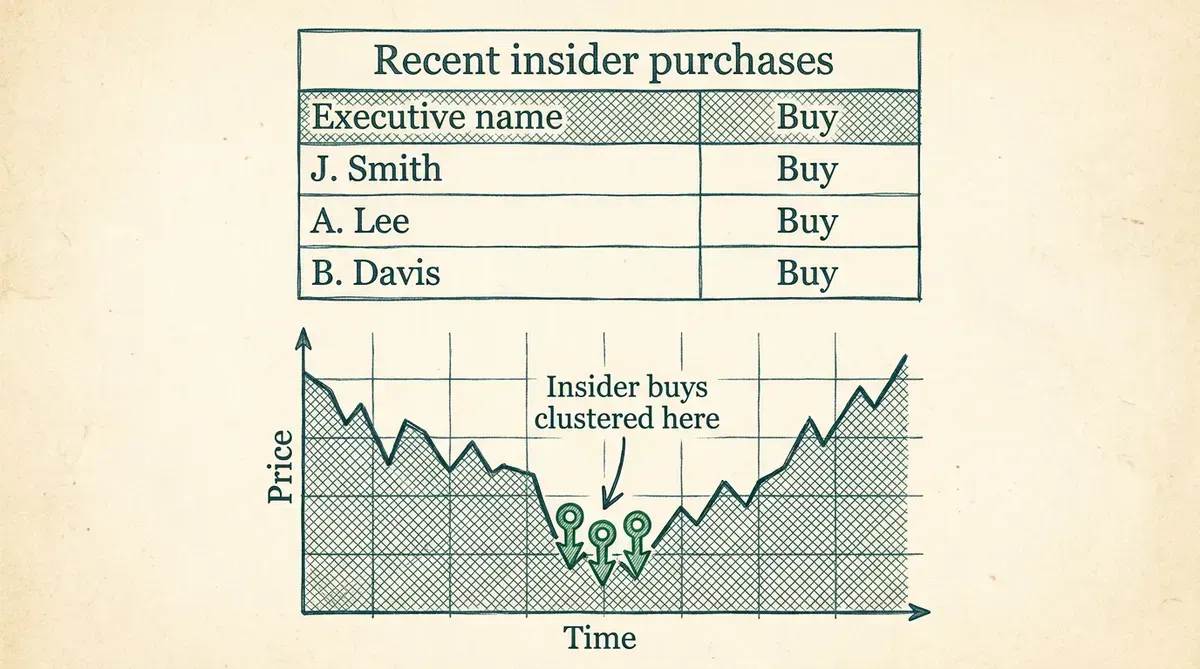
Insider buying is usually signal. There is exactly one reason an executive spends personal cash on company stock in the open market: they believe it's going up. The classic research finding is that insider purchases — especially cluster buys, where several insiders buy within days of each other — have historically preceded above-average returns. The best-looking version of the signal: multiple insiders, meaningful dollar amounts relative to their salaries, open-market purchases (not option exercises), during a beaten-down price.
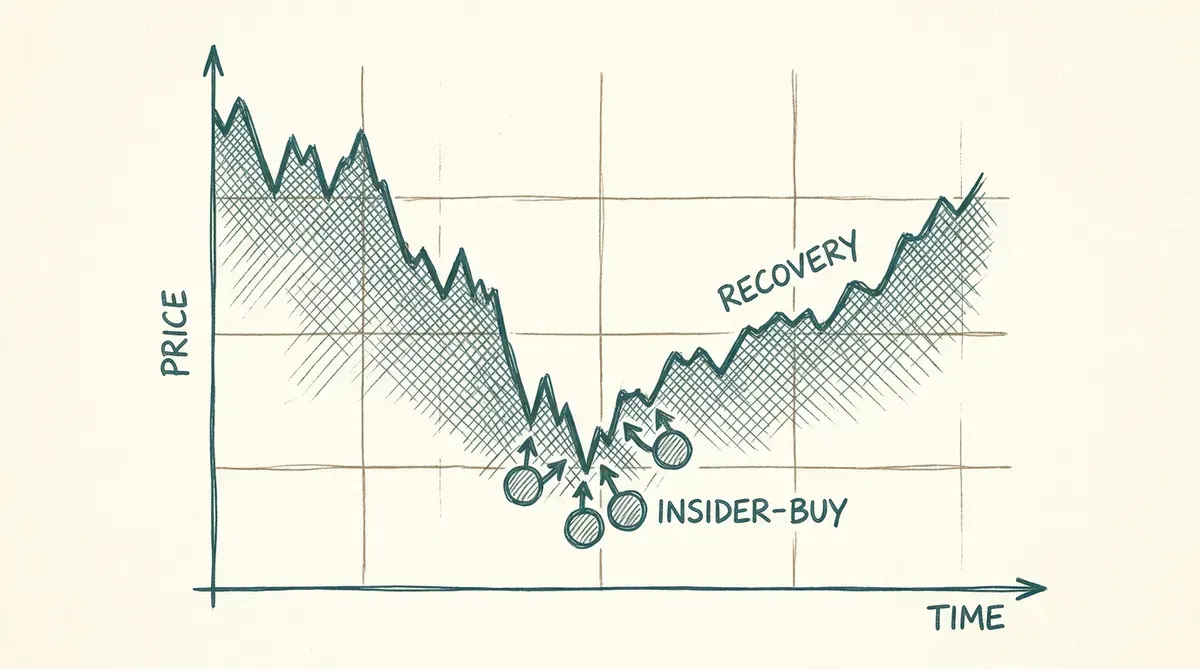
A worked example of the reasoning: a stock falls 40% on an ugly quarter. Is it a value trap or an overreaction? Now you notice the CFO bought $500k of stock last week, and two directors bought the week before. That doesn't prove recovery — insiders can be wrong, and sometimes are — but it powerfully reframes the question: the people with the most information and the most to lose just voted "overreaction" with their own money. Combined with your own check of the fundamentals, that's how conviction gets built.
Putting the signals to work — without the spreadsheet torture
The classic obstacle: this data lives across thousands of individual filings. Aggregating who bought what, netting out sales, comparing across companies, and cross-referencing with fundamentals is exactly the kind of clerical mountain that makes retail investors give up on a real edge.
Relaxfolio flattens the mountain into a question:
- "Insider buying" — insider purchases across the US market over recent months, aggregated and ranked by conviction (net buying as a share of the company), with names, titles, and amounts.
- "Significant insider selling" — the mirror image, for checking stocks you own or are eyeing.
- "What does Berkshire Hathaway hold?" — or any famous investor — pulled from the latest filings, with recent changes.
- Then the crucial second step, in the same tool: type the ticker and vet the business itself — revenue and margin trends, debt, business quality, the news that explains the price. Signal plus homework, in one sitting.
Favourite the insider-buying screen and fresh results arrive by email — a standing radar for the market's most honest signal.
The smart-money checklist
- Is the 13F position a new buy or meaningful add — and by a patient, high-conviction investor?
- Are multiple smart-money signals converging (several funds, or insider cluster buying)?
- Are the insider purchases real open-market buys, in amounts that matter to the buyer?
- Does my own check of the business confirm a temporary problem, not a terminal one? (See: How to Spot a Value Trap.)
- Am I buying with my own thesis — or just borrowing someone else's conviction I'll abandon at the first drawdown?
Follow the smart money for leads. Do the work for conviction. That combination — their radar, your judgment — is available to any retail investor willing to look. Most never do. That's your edge.
Use "insider buying" to review reported ownership activity as one input to independent research. Explore Relaxfolio →
This article is for educational purposes only and is not investment advice. All investing involves risk, including possible loss of principal.
Put this into practice tonight
Ask Relaxfolio in plain English and get a researched answer in minutes.
Get started