A rising stock alone is noise. The same move across related companies is information.
Momentum research is not just finding what's up — it's knowing whether suppliers, enablers, and adjacent businesses are moving too. Relaxfolio groups those connections so you can tell an isolated spike from a broader development worth your attention.
The important question is not only which stock is moving, but why.
Momentum research begins with relative strength and trend structure. The next step is more discriminating: determine whether that strength is isolated, shared by an industry, or developing across a broader investment theme. The answer changes how an investor interprets durability, participation, and risk.
Sector and industry screens can miss related businesses that sit elsewhere in a value chain. A semiconductor equipment provider, power supplier, optical-networking company, and data-centre operator may be connected by the same investment premise while appearing in different industry lists.

Combine technical structure with theme participation.
Research queries for theme-aware momentum analysis.
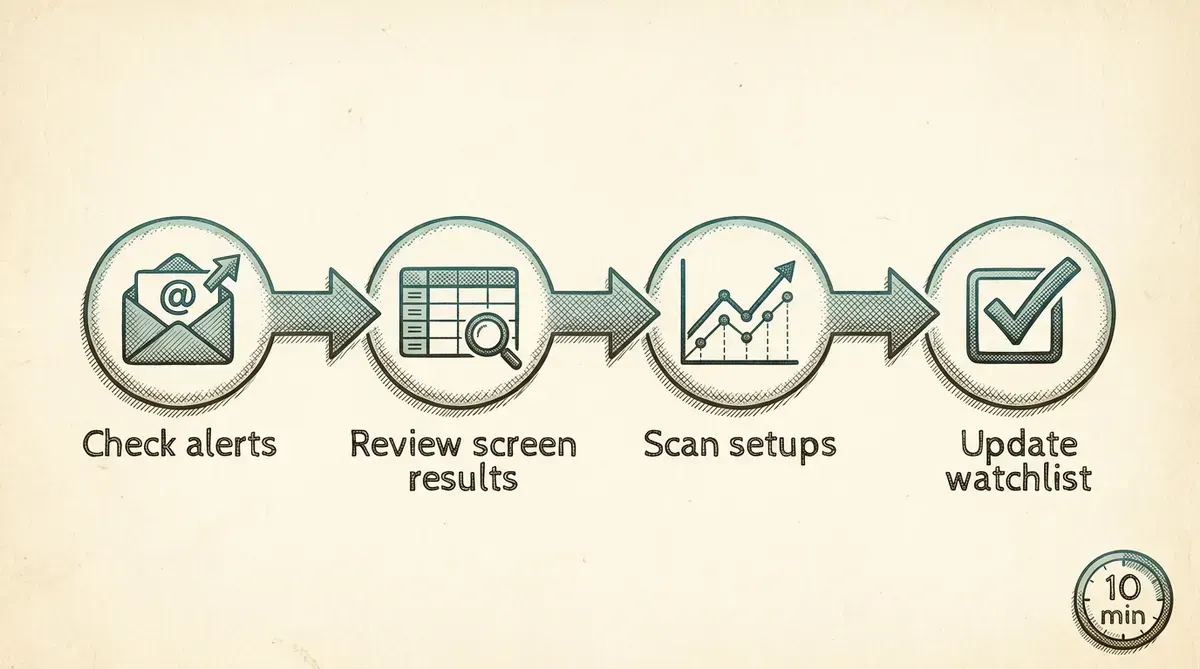
A concise, theme-aware review routine.
- 1 Start with the driver. Review market commentary and theme activity to identify the forces attracting or losing participation.
- 2 Review the theme constituents. Use saved screens for breakouts, new trends, and pullbacks, then compare the related companies rather than considering each result in isolation.
- 3 Examine the leaders and enablers. Review chart structure, financial context, themes, and material developments for the companies that matter most to the premise.
- 4 Document the decision. Record the theme thesis, the selected candidate, entry criteria, and risk parameters separately.
Momentum investing guides.
Membership pricing
A structured process for reviewing trend quality, theme participation, and the distinction between a company move and a broader market development.
$60
$600 · billed annually
See Terms of Service and Privacy Policy for membership terms.
Momentum investing questions
What is relative strength and why do momentum investors use it? ▾
How do you tell a real breakout from a false one? ▾
Can Relaxfolio find stocks crossing above their 150-day moving average? ▾
What is stage analysis? ▾
How does grouping related companies help momentum research? ▾
Can I save a momentum screen and revisit it? ▾
See whether a price move is isolated or shared.
Compare a breakout or trend against the related companies that may be moving with it.
Explore momentum research