Geopolitics and Thematic Investing: Reading Events Through Company Exposure
Wars, elections, sanctions, and supply shocks move markets — but rarely in the way headlines suggest.
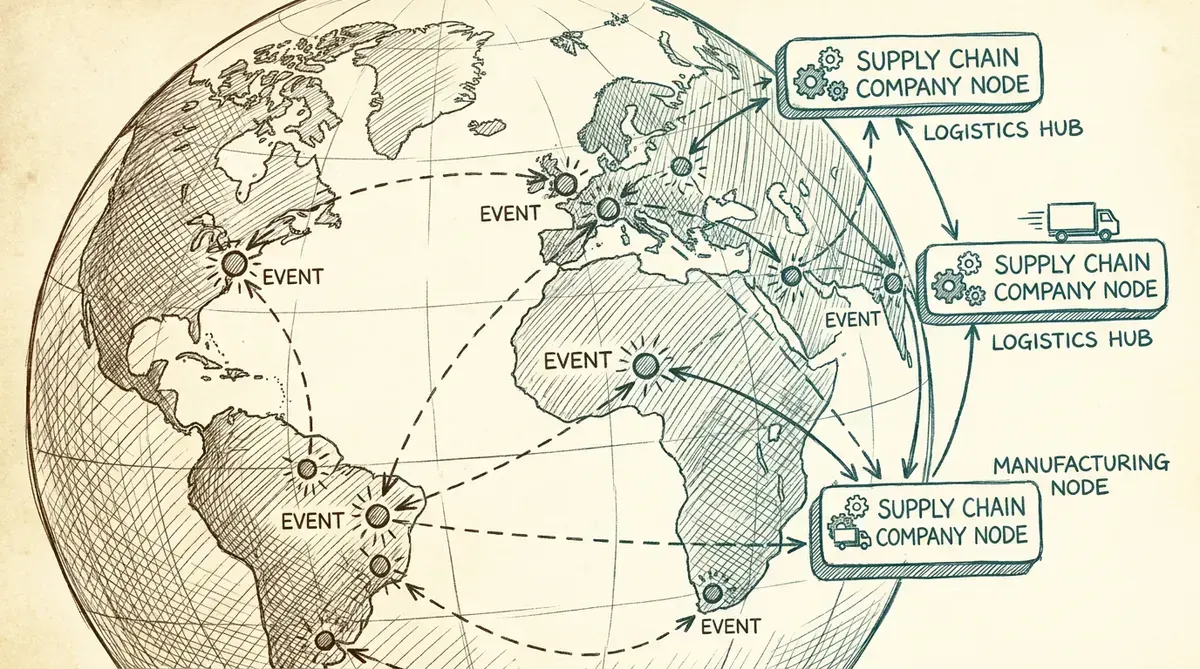
Geopolitics is not a trading signal by itself
When a major geopolitical event hits the news, the first instinct is to ask "what should I buy?" That is the wrong first question. The right first question is "what economic channel does this event affect?"
Geopolitical developments transmit to stocks through identifiable channels:
- Supply disruption — energy, metals, food, shipping, semiconductors
- Defence and security spending — platforms, electronics, services, materials
- Trade and industrial policy — tariffs, subsidies, reshoring, export controls
- Currency and funding conditions — capital flows, rates, sovereign risk
- Demand shifts — travel, commodities, regional consumption
An event may dominate headlines while affecting only one part of the chain — or it may ripple across several themes at once. Mapping the channel separates research from reaction.
The same event, different exposures
Consider how one development can touch unrelated businesses:
Defence spending increases might affect aircraft and missile suppliers, electronic-warfare components, shipbuilders, cyber-security firms, and raw-material producers — each with different lead times, contract visibility, and valuation.
Energy supply concerns might affect producers, pipeline operators, LNG exporters, utilities, industrial users, and alternative-energy enablers — not always in the direction casual headlines imply.
Export controls on advanced technology might hurt equipment sellers in one region while accelerating domestic substitution elsewhere.
Sector labels hide these distinctions. Thematic grouping by exposure makes the research object visible.
First-order vs second-order trades
Geopolitical markets often confuse first-order and second-order effects:
- First-order: The obvious beneficiary named in the headline — often discovered quickly and priced fast.
- Second-order: Suppliers, substitutes, logistics providers, or regional alternatives — sometimes slower to reprice.
- Negative exposure: Companies with stranded assets, disrupted routes, or higher input costs — easy to overlook when the mood is bullish.
Second-order research is usually more work and less crowded. It is also easier to get wrong if you do not verify the actual business exposure.
Policy themes are themes too
Elections and legislation produce thematic research questions that look like geopolitics but operate through policy channels:
- Which industries receive incentives or face new compliance costs?
- Which supply chains are encouraged to relocate?
- Which commodities or technologies become strategic priorities?
Policy-driven themes often develop over years, not days. The research task is similar: map exposure, review breadth, examine individual companies, and note what would change the thesis if the policy path shifts.
How to keep geopolitical research disciplined
Geopolitical narratives invite urgency. Discipline means slowing down enough to verify:
- Name the channel. Supply, demand, spending, regulation, or financing — not just "bullish" or "bearish."
- Map the chain. Who is directly exposed, and who is one step removed?
- Check market pricing. Has the group already moved? Is leadership narrow or broad?
- Read company-level evidence. Fundamentals and material news still matter; a theme does not override balance-sheet risk.
- Write invalidation criteria. What development would mean the market has repriced the story or the thesis no longer holds?
Relaxfolio supports this by letting you begin with macro or policy-related questions, review grouped companies and heatmaps, and open individual names without losing the narrative frame.
Common pitfalls
- Confusing attention with exposure. A company mentioned in the news may have minimal revenue tied to the event.
- Ignoring duration. Some geopolitical effects are one-quarter disruptions; others are multi-year shifts.
- Single-stock concentration. Themes are usually better researched as a group before selecting individual names.
- Treating research output as advice. Maps and screens inform your process; they do not replace judgment about risk, sizing, or timing.
A grounded starting point
When a geopolitical story breaks, resist the first ticker that comes to mind. Instead:
- Write one sentence on the economic channel.
- Ask which themes in the market relate to that channel.
- Review grouped companies and heatmaps for participation.
- Shortlist names for fundamentals and news review.
- Decide what evidence you still need before forming a view.
That is thematic research applied to geopolitics — not prediction, but structured exposure mapping.
Related reading: Thematic Investing 101 · How to Map an Investment Theme to the Right Stocks
Ask "macro themes" to review developing narratives mapped to US stocks and ETFs. Explore Relaxfolio →
This article is for educational purposes only and is not investment advice. All investing involves risk, including possible loss of principal.
Put this into practice tonight
Ask Relaxfolio in plain English and get a researched answer in minutes.
Get started