How to Map an Investment Theme to the Right Stocks
A practical method for turning a narrative into a reviewable list of companies.
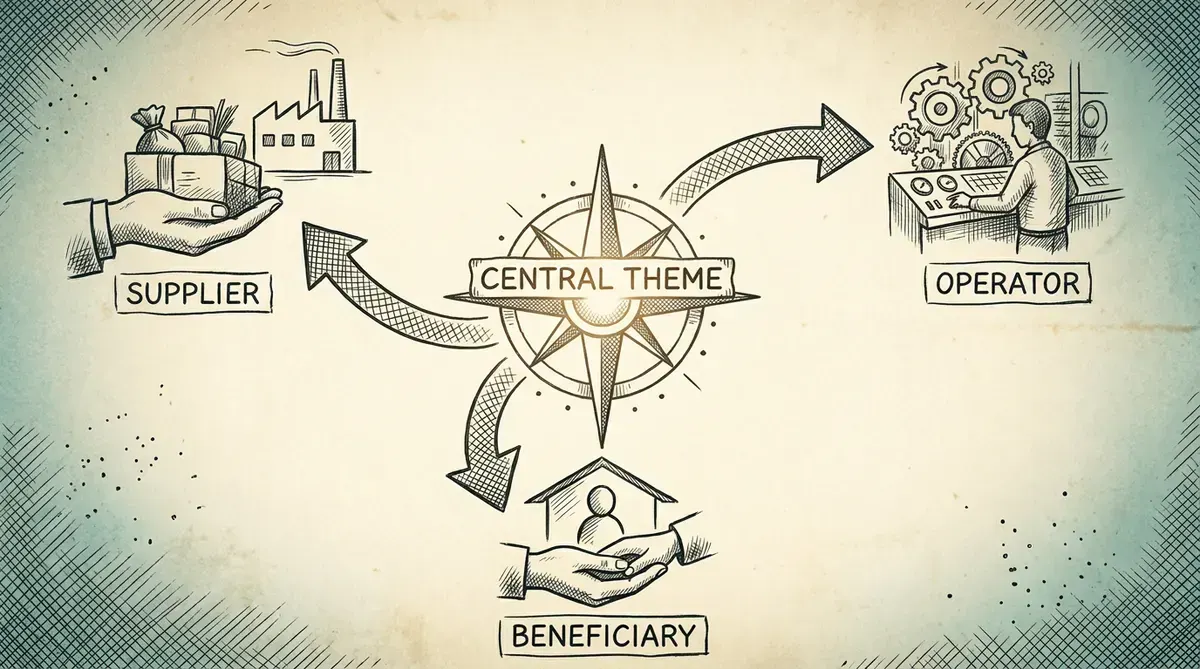
Start with a sentence, not a screen
The most common thematic mistake is opening a screener before defining the premise. A useful theme can be stated in one clear sentence:
- "Hyperscale data-centre buildouts require more power, cooling, and networking."
- "Obesity-drug adoption affects food producers, med-tech, and healthcare providers differently."
- "Copper demand rises when grids expand and electrification accelerates."
If you cannot write that sentence, you are not ready to pick stocks yet. Clarify the driver first.
Break the theme into parts of the chain
Most themes are not one company or one industry. Split the narrative into roles:
| Role | Question to ask |
|---|---|
| Direct operators | Who sells the product or service at the centre of the theme? |
| Enablers | Who supplies critical inputs — equipment, software, materials? |
| Infrastructure | Who builds, powers, cools, connects, or transports what is needed? |
| Second-order beneficiaries | Who gains indirectly if the theme succeeds? |
| Substitutes / losers | Who might be displaced if the theme persists? |
For an AI infrastructure theme, direct operators might include chip designers; enablers include equipment and memory suppliers; infrastructure includes power and data-centre operators. Each role can sit in a different sector.
Mapping the chain prevents the error of buying only the most famous name while missing the businesses with cleaner exposure or better risk/reward.
Use heatmaps to see breadth
Once you have a chain, you need to see participation. A theme heatmap groups stocks by business theme and shows which clusters are leading or lagging. That answers questions a single ticker cannot:
- Is strength concentrated in one sub-theme or spread across the chain?
- Are suppliers lagging leaders — a possible catch-up, or a warning sign?
- Is the whole group moving, or only one or two outliers?
Breadth does not tell you to buy. It tells you whether the market is treating the story as broad or narrow — an important input to further research.
Compare peers within the theme, not only within the industry
Two companies in the same industry may have very different theme exposure. Two companies in different industries may be the closest economic peers for your question.
When comparing candidates, ask:
- Revenue exposure: What share of the business depends on this theme?
- Pricing power: Can the company pass through costs if the theme creates inflation in its inputs?
- Balance sheet: Can it survive if the theme takes longer to develop than expected?
- Competitive position: Is it a leader, a niche supplier, or a commodity participant?
Relaxfolio helps here by placing a company in context — fundamentals, news, ownership activity, and related groups — so comparisons reflect the theme, not just the industry label.
Read the news for mechanism, not mood
Headlines tell you that something happened. Thematic research asks how it transmits to cash flows:
- A tariff announcement affects margins, supply routes, and sourcing decisions — not every company equally.
- A technology standard shift may benefit enablers before operators.
- A geopolitical event may reroute demand before it shows up in quarterly earnings.
Look for mechanisms: who pays more, who sells more, who loses a customer, who gains pricing power. Skip headlines that change sentiment without changing economics.
Document what would change your mind
Before you finish mapping a theme, write two short notes:
- Confirming evidence: What would you expect to see if the theme is developing as you think — across prices, fundamentals, and group breadth?
- Invalidating evidence: What would tell you the theme is wrong, early, or already fully priced?
This keeps thematic work disciplined. Narratives are seductive; written criteria are not.
Putting it together
A repeatable thematic workflow:
- Write the one-sentence driver.
- Sketch the chain — operators, enablers, infrastructure, second-order names.
- Review a theme heatmap or grouped screen for breadth and leadership.
- Open the most relevant names for fundamentals and news.
- Save the screen and revisit as the story evolves.
Related reading: Thematic Investing 101 · Geopolitics and Thematic Investing
Try "AI theme heatmap" or "macro themes" to map a narrative to grouped US stocks and ETFs. Explore Relaxfolio →
This article is for educational purposes only and is not investment advice. All investing involves risk, including possible loss of principal.
Put this into practice tonight
Ask Relaxfolio in plain English and get a researched answer in minutes.
Get started