How to Pick Thematic ETFs Without Hidden Overlap
The label on the fund is marketing. The holdings are the exposure.
Why thematic ETFs are popular
Thematic ETFs package a business narrative into one ticker: artificial intelligence, cybersecurity, uranium, weight-loss drugs, reshoring. For investors who think in stories rather than GICS sectors, that is appealing.
The risk is assuming the theme name tells you everything. Two funds both labeled "AI" or "robotics" can hold different stocks, charge different fees, and behave differently in a drawdown. Some thematic funds are narrow and concentrated; others are broad with only a thematic label.
Good thematic ETF research compares holdings, concentration, and cost — not just recent performance.
Step 1: Name the exposure you actually want
Before comparing funds, write one sentence:
- "I want exposure to companies selling AI infrastructure — chips, networking, and data centres."
- "I want exposure to the obesity-drug supply chain, not just the drugmakers."
That sentence becomes your filter. A fund whose top holdings do not match the sentence is a mismatch, even if the ticker sounds right.
Relaxfolio groups ETFs by theme and shows top holdings in screen results so you can test the sentence against reality.
Step 2: Compare top holdings, not taglines
For each candidate fund, review:
- Top 10 holdings — Are they leaders in the theme or generic megacaps?
- Weight concentration — Does one or two names dominate the fund?
- Overlap with your core — Does your broad market ETF already own 8% of the same stock?
- Overlap with other satellites — Do you already hold a sector ETF covering the same names?
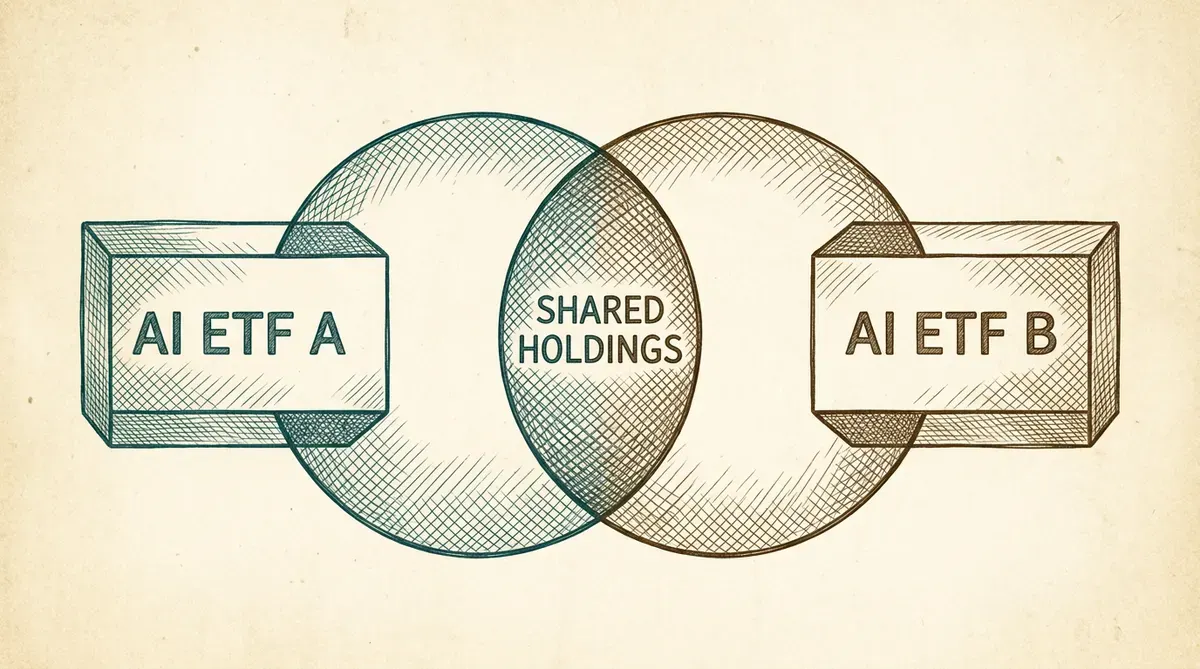
If two thematic ETFs share more than half their top holdings, you are choosing between packaging and fees — not between two different views.
Step 3: Check fees and liquidity
Thematic funds often charge higher expense ratios than broad index ETFs. That may be acceptable for a niche exposure you cannot replicate cheaply — but compare peers. Two similar AI funds with a 0.35% vs 0.75% fee gap compounds over years.
Also note assets under management and average volume. Very small thematic ETFs can have wider spreads and higher trading friction.
Step 4: Size the satellite appropriately
Thematic ETFs work best as satellites — sized relative to a core holding, not as the whole portfolio. A common mistake is stacking multiple thematic funds that all lean on the same megacap growth names, then wondering why the " diversified" portfolio moves like a single tech stock.
A simple rule: if adding a thematic ETF increases your effective exposure to one name beyond what you would tolerate in a single stock, trim elsewhere or skip the fund.
Red flags in thematic ETF selection
- Label drift: Fund name says "AI" but top holdings are general large-cap tech you already own.
- Duplicate satellites: Two thematic funds from the same narrative with nearly identical holdings.
- Single-stock dominance: One holding above 20% without you intending a concentrated bet.
- Performance chasing: Buying last year's winner after the narrative is widely known.
Using Relaxfolio for thematic ETF comparison
Try queries like:
- "Compare AI ETFs"
- "ETF heatmap" (grouped by theme)
- "Cybersecurity ETFs" or other theme-specific screens
Review the table columns: theme, returns, expense ratio where available, and top holdings. Open individual holding tickers if a fund's move needs explanation.
Related: ETF Investing 101 · Sector and Country Rotation with ETFs
Ask "Compare AI ETFs" or "ETF heatmap" to review thematic funds with holdings visible in the results. Explore Relaxfolio →
This article is for educational purposes only and is not investment advice. All investing involves risk, including possible loss of principal.
Put this into practice tonight
Ask Relaxfolio in plain English and get a researched answer in minutes.
Get started